


Dental Bridges in Shoreline: How They Replace Missing Teeth and Support Your Bite
August 14, 2026 9:00 amA tooth can go missing for plenty of reasons. Sometimes it cracks too deeply to repair, decay weakens it beyond saving, or an infection eventually leads to extraction. In other cases, the tooth may have been lost years ago after an accident or previous dental treatment, and the open space has simply become part of daily life. At first, the gap may seem mostly cosmetic. But then food starts collecting there, chewing shifts to the other side, or the teeth around the space slowly begin to move. You may even realize that you have been avoiding certain foods for months without really thinking about why. At Mountain to Sound Dental in Shoreline, WA, Dr. Megan Jones, Dr. Abigail Mazon, and Dr. Brian Mills can look at whether a dental bridge is a good way to replace the missing tooth or teeth. Bridges come in several forms, including traditional bridges, cantilever bridges, Maryland bridges, and implant-supported bridges. The right choice depends on where the space is, how many teeth are missing, what the neighboring teeth look like, and how much chewing pressure the area needs to handle.
What Is a Dental Bridge?
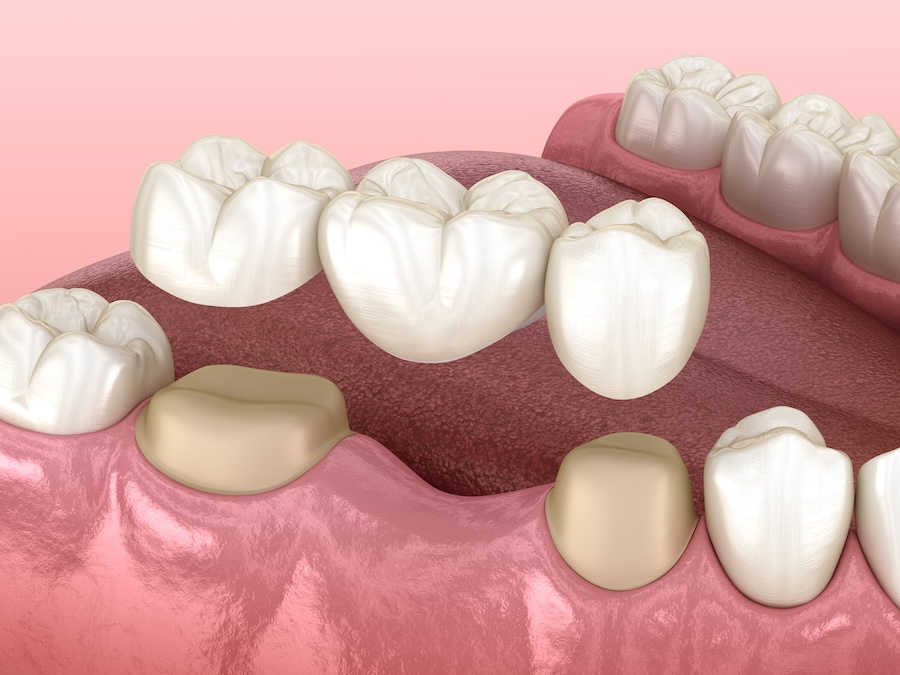
A dental bridge fills an open space with one or more replacement teeth. Unlike a removable partial denture, a bridge stays in place, so you do not take it out at night or remove it for meals. Depending on the type of bridge, support comes from neighboring natural teeth or from dental implants. By replacing the missing tooth, a bridge can restore a chewing surface that has been absent for months or years. It can also help keep nearby teeth from drifting farther into the space. And if the gap shows when you smile, the replacement tooth can restore the appearance of that area too. Still, a bridge has to do more than fill an empty spot. It needs to fit the way your upper and lower teeth come together, provide enough strength for that part of the mouth, and be shaped so you can clean around it. So before we recommend one, we look at the whole area rather than just the missing tooth.Traditional Bridges
A traditional bridge is one of the most common bridge designs. The replacement tooth sits in the gap, while crowns on the teeth on either side hold it securely in place. Once the bridge is cemented, the entire restoration stays fixed in the mouth. This design can work especially well when the neighboring teeth already need crowns. For example, one may have a large old filling while the other has a crack, heavy wear, or another reason for full coverage. In that situation, using those teeth to support a bridge may fit naturally with the restorative work they already need. However, if both neighboring teeth are healthy and have never needed crowns, that changes the discussion. Supporting a traditional bridge requires reshaping those teeth, so an implant or another option may be worth comparing first. Healthy teeth are worth preserving when there is a good way to do that.Cantilever Bridges
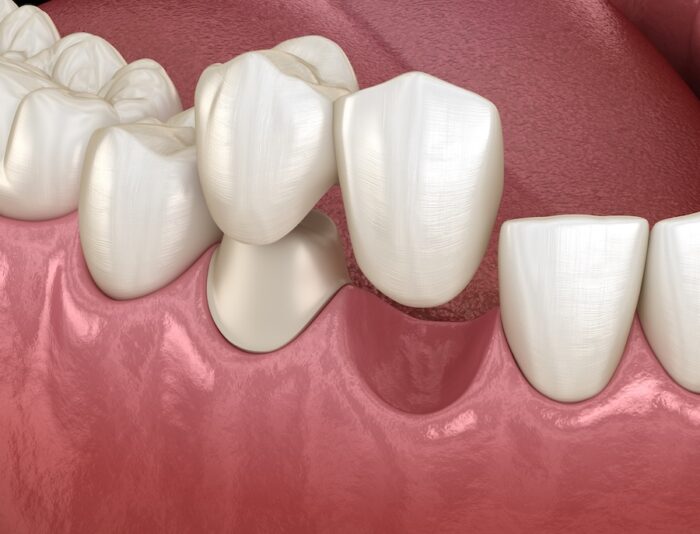 A cantilever bridge is supported by a tooth on only one side of the missing space. That can make it an option when there is no usable tooth on the other side, although it is not appropriate for every location. Because all of the support comes from one direction, the forces on the anchor tooth need to be considered carefully.
For example, a cantilever design may work better in an area that does not take the heaviest chewing pressure. Back molars have a much tougher workload than many front teeth, so putting too much force on one supporting tooth can create problems over time. That is why location and bite play such a big part in deciding whether this design makes sense.
The supporting tooth also needs to be strong enough for the job. A tooth with significant bone loss, a large crack, or very little healthy structure left may not be a good anchor. In that case, another bridge design or an implant may provide better support.
A cantilever bridge is supported by a tooth on only one side of the missing space. That can make it an option when there is no usable tooth on the other side, although it is not appropriate for every location. Because all of the support comes from one direction, the forces on the anchor tooth need to be considered carefully.
For example, a cantilever design may work better in an area that does not take the heaviest chewing pressure. Back molars have a much tougher workload than many front teeth, so putting too much force on one supporting tooth can create problems over time. That is why location and bite play such a big part in deciding whether this design makes sense.
The supporting tooth also needs to be strong enough for the job. A tooth with significant bone loss, a large crack, or very little healthy structure left may not be a good anchor. In that case, another bridge design or an implant may provide better support.
Maryland Bridges
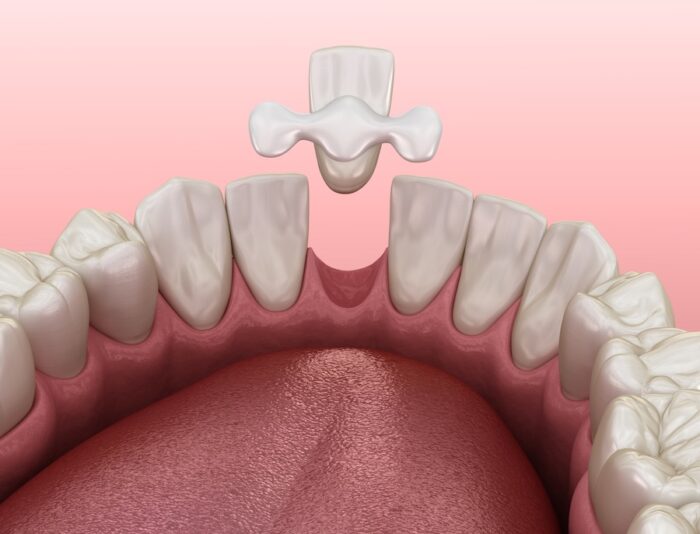 A Maryland bridge, sometimes called a resin-bonded bridge, is commonly used in certain front-tooth situations. Instead of placing crowns over the neighboring teeth, the replacement tooth is held in place by thin wings that bond to the backs of one or both adjacent teeth. Because of that, much less natural tooth structure may need to be altered.
That can be a good fit when the teeth beside the gap are healthy and you would rather avoid crowning them. For example, a missing front tooth may sit between two completely intact teeth. In that situation, a Maryland bridge can sometimes replace the space while leaving most of the neighboring enamel alone.
However, this type of bridge is not built for every bite or every missing tooth. Heavy bite pressure, limited room, or certain tooth positions can make the bonded wings less reliable. So it is usually considered for carefully selected front-tooth areas rather than places where the bridge has to take the full force of molar chewing.
A Maryland bridge, sometimes called a resin-bonded bridge, is commonly used in certain front-tooth situations. Instead of placing crowns over the neighboring teeth, the replacement tooth is held in place by thin wings that bond to the backs of one or both adjacent teeth. Because of that, much less natural tooth structure may need to be altered.
That can be a good fit when the teeth beside the gap are healthy and you would rather avoid crowning them. For example, a missing front tooth may sit between two completely intact teeth. In that situation, a Maryland bridge can sometimes replace the space while leaving most of the neighboring enamel alone.
However, this type of bridge is not built for every bite or every missing tooth. Heavy bite pressure, limited room, or certain tooth positions can make the bonded wings less reliable. So it is usually considered for carefully selected front-tooth areas rather than places where the bridge has to take the full force of molar chewing.
Implant-Supported Bridges
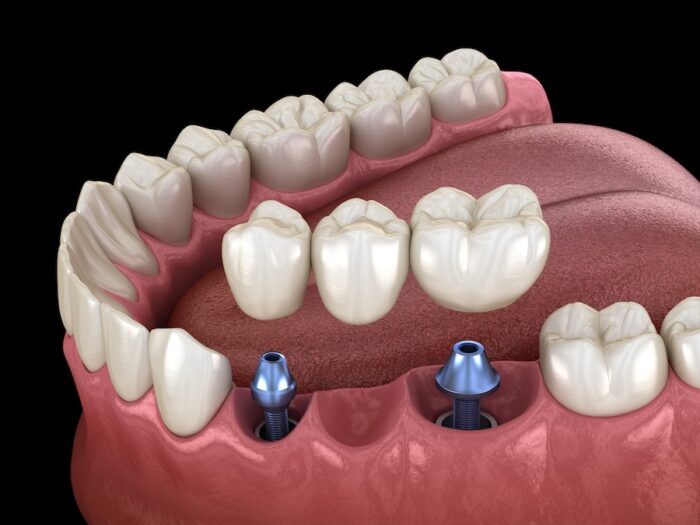 An implant-supported bridge uses dental implants in the jawbone instead of natural teeth for support. This can be especially helpful when several teeth are missing next to one another. Rather than placing an implant for every missing tooth, strategically placed implants may support a bridge that replaces several teeth at once.
Because the implants carry the bridge, neighboring natural teeth do not need to be prepared as anchors. That can be a big advantage when the teeth beside the space are healthy. It can also provide fixed support in an area where there are not enough natural teeth left for a traditional bridge.
Of course, implant-supported bridges involve surgery and healing. There also needs to be enough bone at the implant sites to support them, and some patients may need bone grafting first. So while the finished bridge stays fixed in place, the treatment process is usually longer than it is for a traditional tooth-supported bridge.
An implant-supported bridge uses dental implants in the jawbone instead of natural teeth for support. This can be especially helpful when several teeth are missing next to one another. Rather than placing an implant for every missing tooth, strategically placed implants may support a bridge that replaces several teeth at once.
Because the implants carry the bridge, neighboring natural teeth do not need to be prepared as anchors. That can be a big advantage when the teeth beside the space are healthy. It can also provide fixed support in an area where there are not enough natural teeth left for a traditional bridge.
Of course, implant-supported bridges involve surgery and healing. There also needs to be enough bone at the implant sites to support them, and some patients may need bone grafting first. So while the finished bridge stays fixed in place, the treatment process is usually longer than it is for a traditional tooth-supported bridge.
Why Replace a Missing Tooth?
People can adapt to a missing tooth surprisingly well. You may learn to chew around the space, move tougher foods to the opposite side, or automatically rinse after meals because food always seems to find the gap. After a while, those little workarounds can feel normal. Meanwhile, the teeth around the space may keep changing. Nearby teeth can slowly lean or drift, while the tooth above or below the gap may move farther into the empty area because it no longer has anything to meet. Those shifts can affect the bite and reduce the room available for a future replacement. A missing back tooth can also leave the remaining teeth carrying more of the chewing load. You may not notice that with soft foods, but a crusty sandwich or handful of nuts can make the imbalance much more obvious. Replacing the tooth gives that side of the mouth another surface to work with again.How a Bridge Supports Your Bite
When you lose a tooth, the way you chew often changes with it. If you have spent months sending most of your food to the other side, the teeth over there may be taking more pressure than before. A bridge can restore a contact point in the missing area so chewing is spread more evenly. At the same time, the replacement tooth needs to meet the opposing teeth correctly. A bridge that sits even slightly too high can get your attention very quickly once the numbness wears off. Suddenly one spot seems to arrive at every bite before the rest of your teeth do. That is why bite adjustments are part of finishing the bridge. The replacement needs to meet the opposing teeth comfortably without taking more force than it should. Once it fits properly, the goal is for the bridge to feel like it belongs there rather than like something your jaw has to work around.The Teeth Beside the Gap
The condition of the neighboring teeth can change which type of bridge makes the most sense. They may be completely healthy, or they may already have large fillings, crowns, cracks, or other dental work. We look at those teeth along with the open space before recommending a plan. For example, if both neighboring teeth already have large restorations and are likely to need crowns anyway, a traditional bridge may fit well. But if those teeth are healthy and untouched, an implant-supported option may preserve more natural tooth structure. In certain front-tooth areas, a Maryland bridge may also be worth considering. That is why two people with the same missing tooth can end up with different recommendations. One may have strong, untouched teeth beside the space, while the other has teeth that already need restorative work. The gap may look similar, but the starting point is not.Where the Missing Tooth Is Located
Front teeth and back teeth do different jobs, so bridge designs are not interchangeable. Front teeth show more when you smile and generally take less chewing force than molars. Back teeth, meanwhile, handle much heavier pressure every time you eat. A Maryland bridge may work well in a carefully selected front-tooth space, but that same design would usually not be suited to a missing molar. Likewise, a cantilever bridge needs careful bite planning because only one side is providing support. Traditional and implant-supported bridges often handle heavier demands more predictably when the surrounding conditions are right. Appearance also plays a bigger role near the front of the mouth. The color, shape, gumline, and way the replacement tooth sits in the space all become more visible. In the back, strength and chewing function may take more of the spotlight.How Many Teeth Can a Bridge Replace?
A bridge can replace one tooth, but certain designs can replace several adjacent teeth. As the span gets longer, though, the bridge needs more support. A small bridge replacing one tooth has a very different workload from a restoration spanning several missing teeth. With a traditional bridge, the supporting natural teeth need enough strength and bone support to carry the load. As more teeth are added, the forces on those anchors increase. Because of that, a long gap may lead to a discussion about implants rather than simply extending a tooth-supported bridge farther. Implant-supported bridges can be especially helpful when several teeth in a row are missing. A few well-positioned implants may support multiple replacement teeth without requiring an implant underneath each space. Dr. Jones, Dr. Mazon, or Dr. Mills can show you where that support would come from and what the finished bridge would replace.What Happens During Treatment?
For a traditional bridge, the supporting teeth are prepared so crowns can fit over them. Then impressions or digital scans are taken to record the gap, nearby teeth, and bite. Those records are used to create the final bridge. A temporary bridge is often worn while the permanent one is being made. It protects the prepared teeth and fills the space in the meantime, although you will want to be a little more careful with very sticky or hard foods. Caramels and temporary dental work are rarely a great partnership. When the final bridge is ready, Dr. Jones, Dr. Mazon, or Dr. Mills checks the fit, color, contacts, and bite before it is cemented into place. If something feels slightly high or tight, adjustments can be made. Once everything fits well, the bridge becomes a fixed part of the mouth.How Do You Clean a Dental Bridge?
Because the replacement tooth is connected to the crowns beside it, ordinary floss cannot drop straight between each part the way it does between separate natural teeth. You still need to clean underneath the replacement tooth and along the gumline, though. Plaque and food can collect there just as easily as they can anywhere else. Floss threaders, interdental brushes, or other cleaning aids can help reach those areas. Our team can show you how to use them, and after a little practice, the routine usually becomes much faster. The first few tries may involve a bit of finger gymnastics, but most people find a method that works well for them. The supporting teeth still need good daily care because cavities can develop around the crown margins. Likewise, the gums underneath the bridge can become irritated if plaque sits there. Keeping the bridge clean protects both the restoration and the natural teeth holding it in place.How Long Does a Dental Bridge Last?
Dental bridges can serve for many years, but their lifespan depends partly on what is happening around them. The health of the supporting teeth, gum condition, bite pressure, cleaning habits, and bridge design all play a role. A bridge placed on healthy, well-supported teeth has a very different starting point from one placed over teeth that have already had extensive work. Grinding and clenching can also put extra strain on a bridge. If you wake with jaw soreness, have flattened tooth edges, or have broken crowns and fillings before, let us know. A nightguard may be recommended to help protect the bridge from some of that nighttime pressure. Regular exams give us a chance to check the crown margins, supporting teeth, gums, and bite. A bridge can still feel completely normal while a small problem begins underneath one end. Finding that change early can save a much bigger headache later.Bridge or Dental Implant?
A traditional bridge relies on neighboring teeth, while a single dental implant is supported directly by the jawbone. Because of that, an implant can replace a missing tooth without crowning the teeth on either side. However, implants involve surgery and a longer healing period. A bridge is often completed more quickly because there is no implant healing phase. It may also fit particularly well when neighboring teeth already need crowns. On the other hand, if those teeth are healthy and untouched, an implant may allow them to stay that way. Cost, treatment time, bone availability, the condition of neighboring teeth, and your preference for surgery all come into the comparison. Dr. Jones, Dr. Mazon, or Dr. Mills can show you what each option would require in your specific space. That makes the decision much easier than trying to compare two treatments in the abstract.Dental Bridges at Mountain to Sound Dental in Shoreline, WA
If a tooth was lost after a crack, decay, an infection, or an extraction years ago, you may have more than one way to replace it. At Mountain to Sound Dental in Shoreline, Dr. Megan Jones, Dr. Abigail Mazon, and Dr. Brian Mills can look at the gap, the neighboring teeth, the bone, and the way your bite has adjusted since the tooth disappeared. From there, we can explain whether a traditional, cantilever, Maryland, or implant-supported bridge fits the area. Tell us what you have noticed outside the dental office too. Maybe food seems to find the gap before you do, you have been chewing on one side for so long that it feels automatic, or a missing front tooth is the first thing you notice in photographs. Those everyday details help us understand what you want the replacement to improve. If you are considering a dental bridge in Shoreline, schedule a visit with Mountain to Sound Dental. We can examine the area, explain which bridge designs are realistic for your mouth, and compare them with your other tooth-replacement options. We’d be happy to welcome you in and help you find a replacement that feels comfortable when you eat, speak, and smile! Contact UsCategorised in: Dental Bridges
